RTX Spark laptops are pushing forward an agentic future for Microsoft's Windows OS
Six new RTX Spark laptops, a Windows built for AI agents and a smarter Copilot. Here's what Microsoft and NVIDIA announced, and who it's for.

In 1981, IBM envisioned a system that was more powerful and capable than minicomputers of the day, upgradeable and repairable, and available to home users to do whatever they wanted. IBM had to be convinced to do this. Initially it wanted nothing more than to keep siloing profits from enterprise sales. But an existential threat loomed.
Over the course of the 1970s, the microcomputer market had begun to sew up compute needed by home users and small businesses, and a growing market dominated by Tandy Corporation, Commodore Business Machines, and Apple Computer had taken hold. These computers were much less capable than the business machines IBM was selling to corporate customers, but those same customers were now also buying the Apple II.
The price was too attractive to ignore, and Steve Jobs gave great presentations.
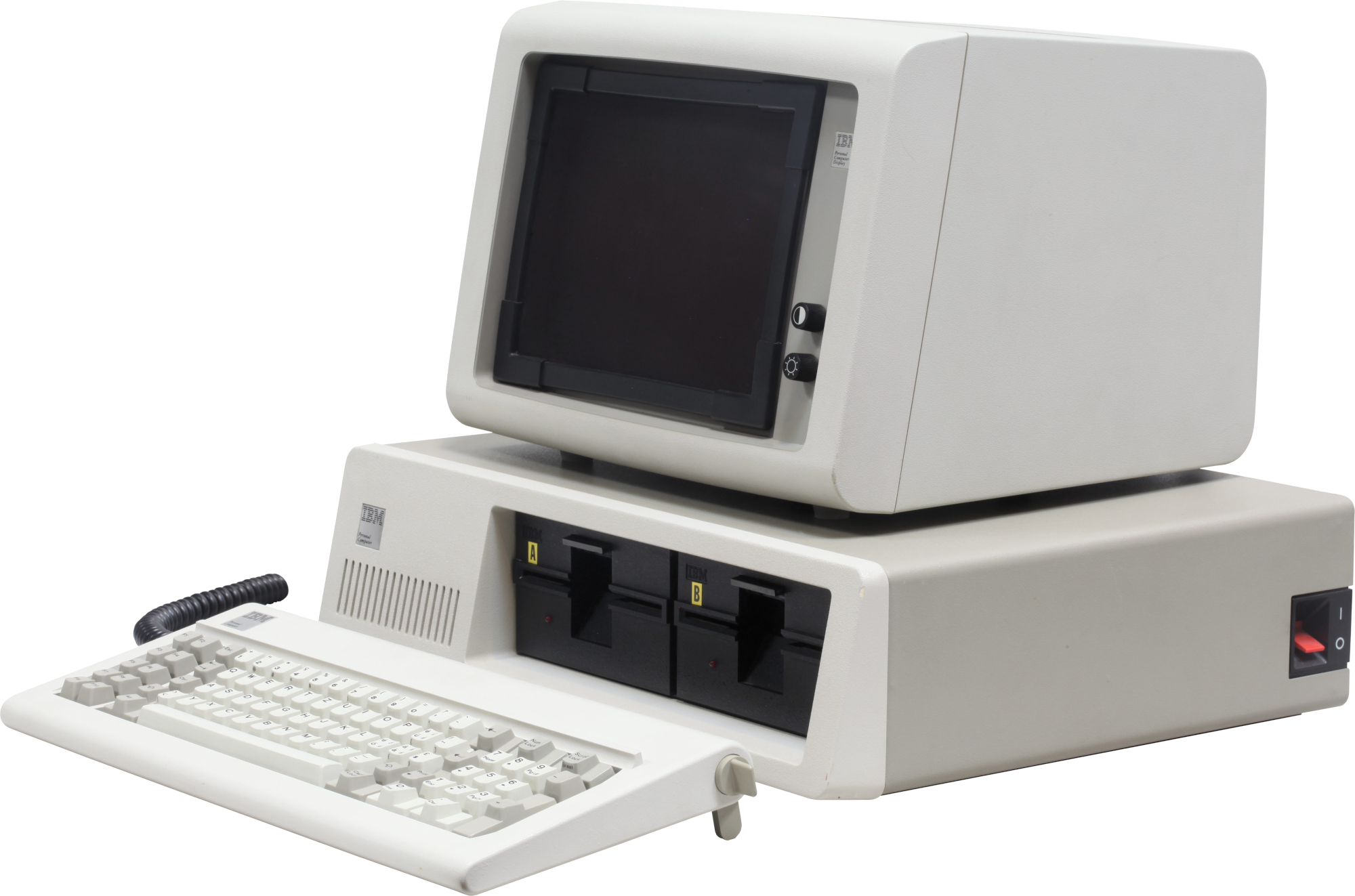
Recognising the threat almost too late, IBM rapidly commissioned a skunkworks project to develop a prototype based on Intel's 8088 processor. They had a motherboard just 40 days later, fully working examples within four months, and full-scale production inside of a year. A licensed version of Microsoft's PC DOS operating system shipped with it.
1981 turned out to be a banger year for IBM's revenues, and the company's success snowballed. It birthed the modern PC industry and the IBM PC Compatible standard with it, gave rise to AMD as a vital second-source partner for x86 processors, and everything else that followed was a result of what happened inside the Project Chess offices at IBM.
Microsoft and NVIDIA think that we've arrived at one of those pivotal years once again. At a Windows & Surface event in San Francisco on 7 October, the two companies launched a new family of Windows laptops built around NVIDIA's RTX Spark chip, and laid out how Windows itself is changing to run AI agents on your new Copilot+ PC.
What is RTX Spark?
NVIDIA RTX Spark is a System-on-Chip (SoC) design that puts an NVIDIA Blackwell RTX graphics processor (up to 6144 cores) and an NVIDIA Grace processor (up to 20 cores) on the same silicon, connected with NVIDIA's proprietary NVLink-C2C chip-to-chip interconnect. NVIDIA rates it at up to one petaflop of AI performance, measured in low-precision FP4 format.
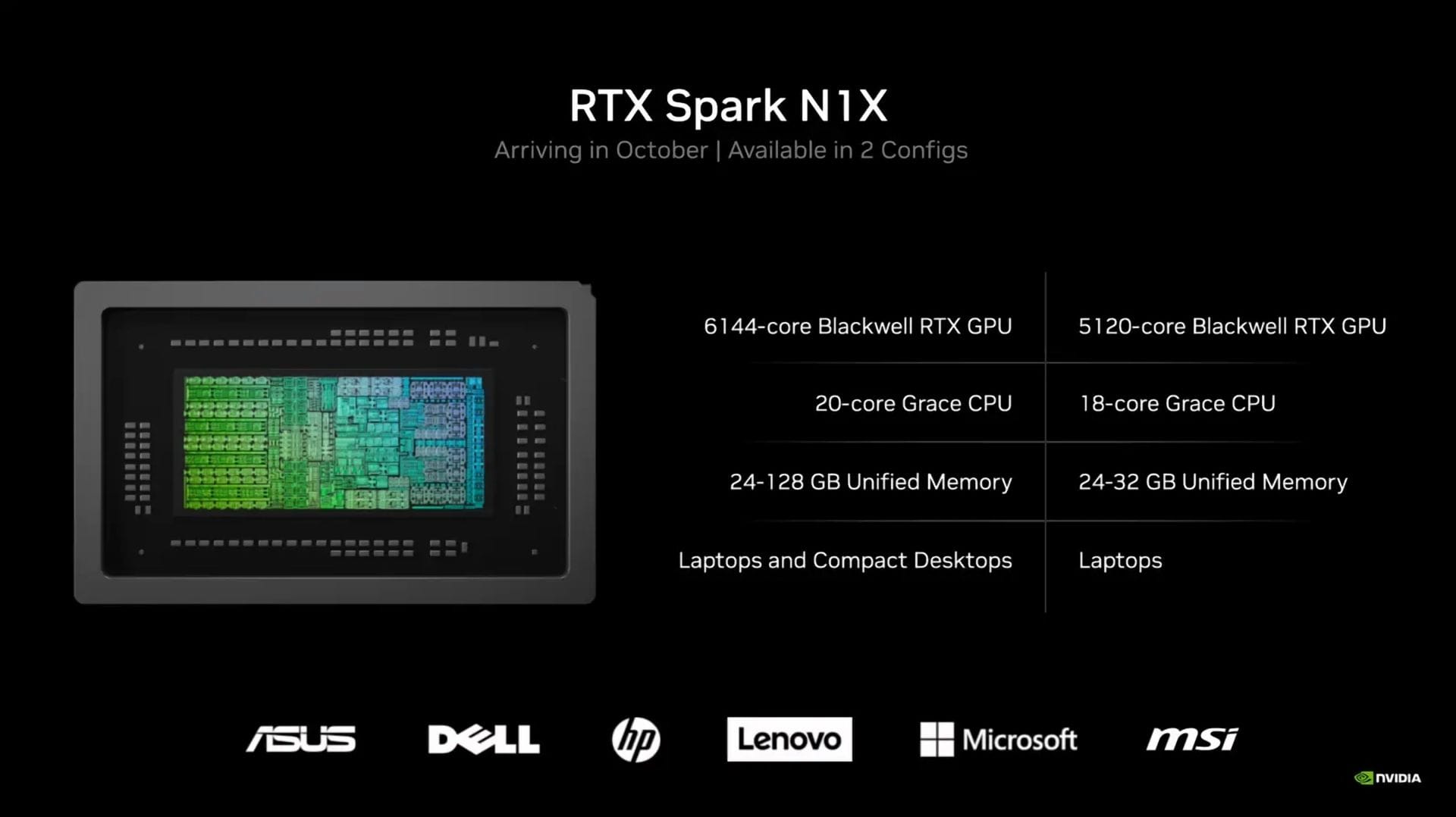
The architecture is Arm-based. It has a unified memory design, with up to 128GB of LPDDR5X on-board. It has an NPU, full support from Windows 11, and is designed to run AI models of more than 120 billion parameters locally, without sending anything to the cloud. NVIDIA already sold this same package inside their GB10-powered Spark AI workstations, and variants from partners are already available on our store.
It is a powerhouse for local AI. But while the GB10 shipping in those dedicated devices was designed to run headless and offer local compute capabilities. RTX Spark is designed for use inside laptops, mini PCs, and desktop workstations.
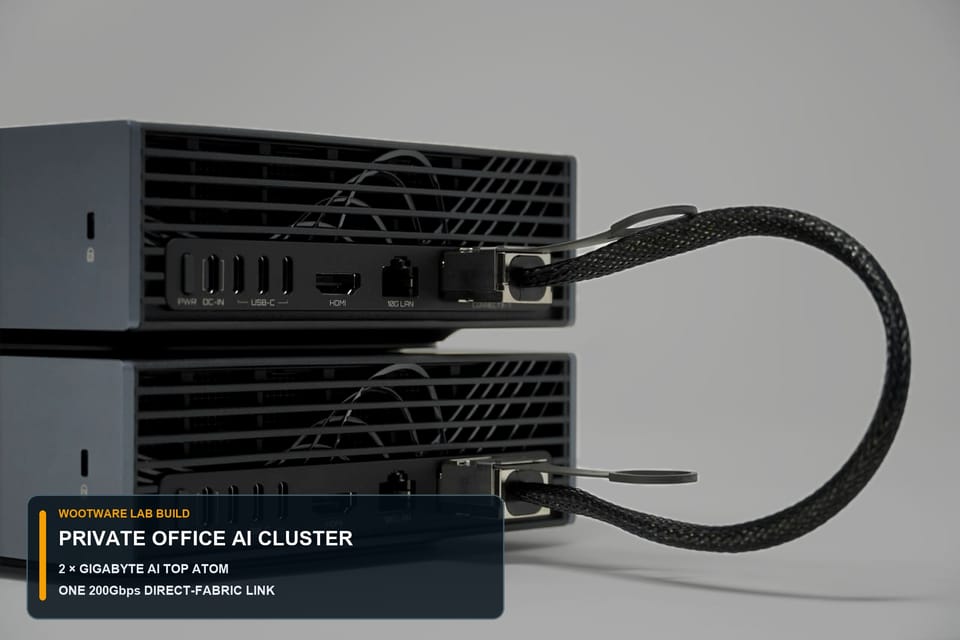
Some key cuts have been made to meet the lower platform cost needed to support these products. RTX Spark does not support NVIDIA's Connect-X7 high-speed networking, and you can't pair systems together to combine the memory into a single, logical pool to run local models that need more than 128GB of RAM.
There are also variants with fewer cores and less on-board memory to meet lower price points. A cheaper 18-Core config will ship with either 24GB or 32GB of memory, and includes a 5120-core Blackwell GPU.
New laptops with RTX Spark
During the Windows & Surface event, Microsoft announced that six new laptops would be available for pre-order in the US, shipping from 16 October:
| Model | What Stands Out |
|---|---|
| ASUS ProArt P16 and P14 | ASUS Lumina Pro OLED displays and large batteries, in 16" and 14" sizes for creators who travel |
| Dell XPS 16 Creator Edition | The first XPS with RTX Spark, aimed at creators and developers who want accurate colour in a premium chassis |
| HP OmniBook Ultra 16 | An ultra-thin design with new cooling to hold performance under long AI workloads |
| Lenovo Yoga 9n 2-in-1 | A 360-degree convertible with pen input on both surfaces |
| MSI Prestige N16 Flip AI+ | A 16" UHD+ Tandem OLED flip design with a 99.9Wh battery |
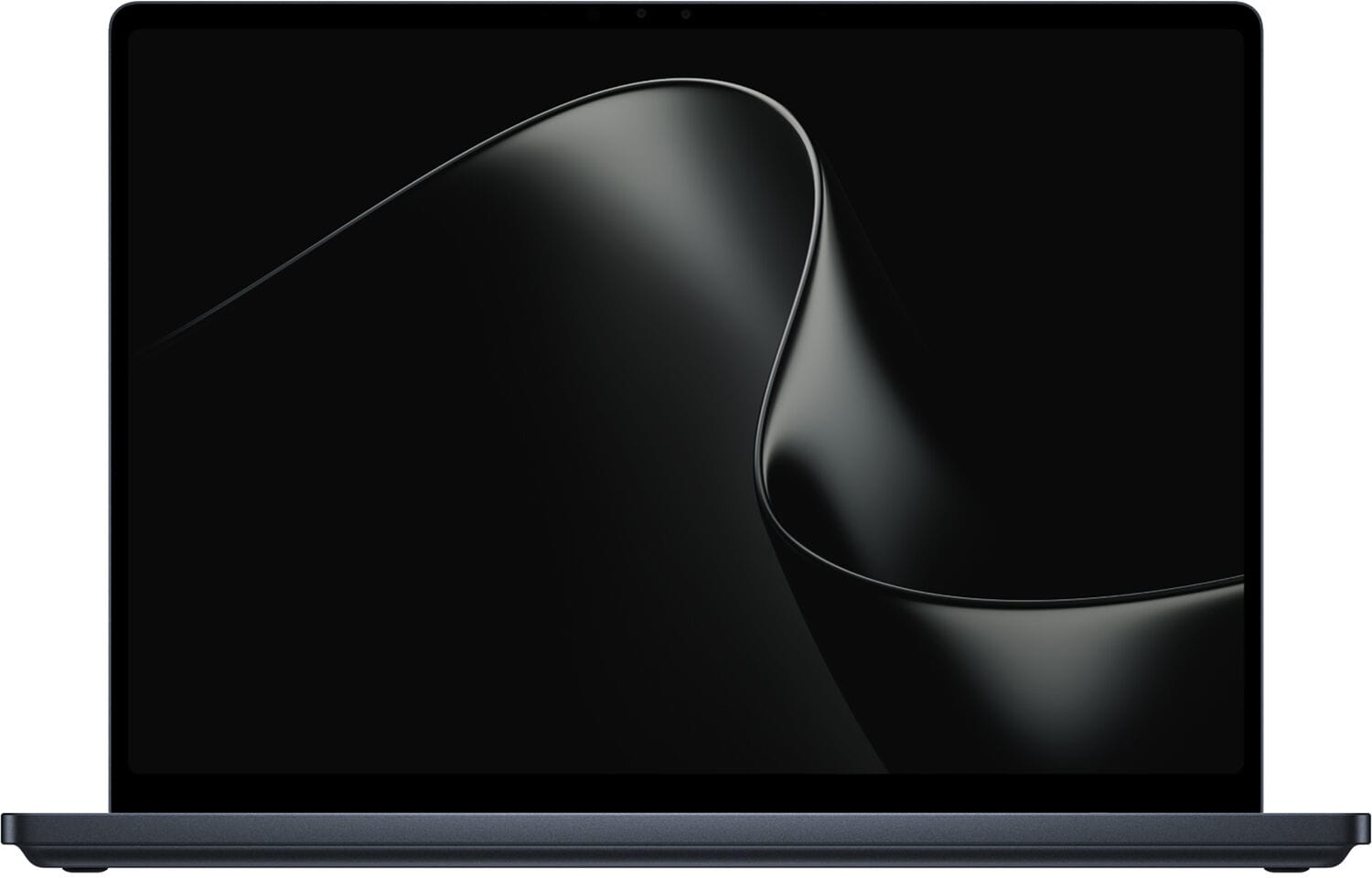
| Microsoft Surface Laptop Ultra | Microsoft's most powerful Surface Laptop, with a 15" touchscreen and up to 128GB of memory |
Five of these would be from Microsoft and NVIDIA partners, namely ASUS, Dell, HP, Lenovo, and MSI. These would all be aimed at professionals looking for a device in the 14" to 16" size for their work, including developers, designers, and programmers.
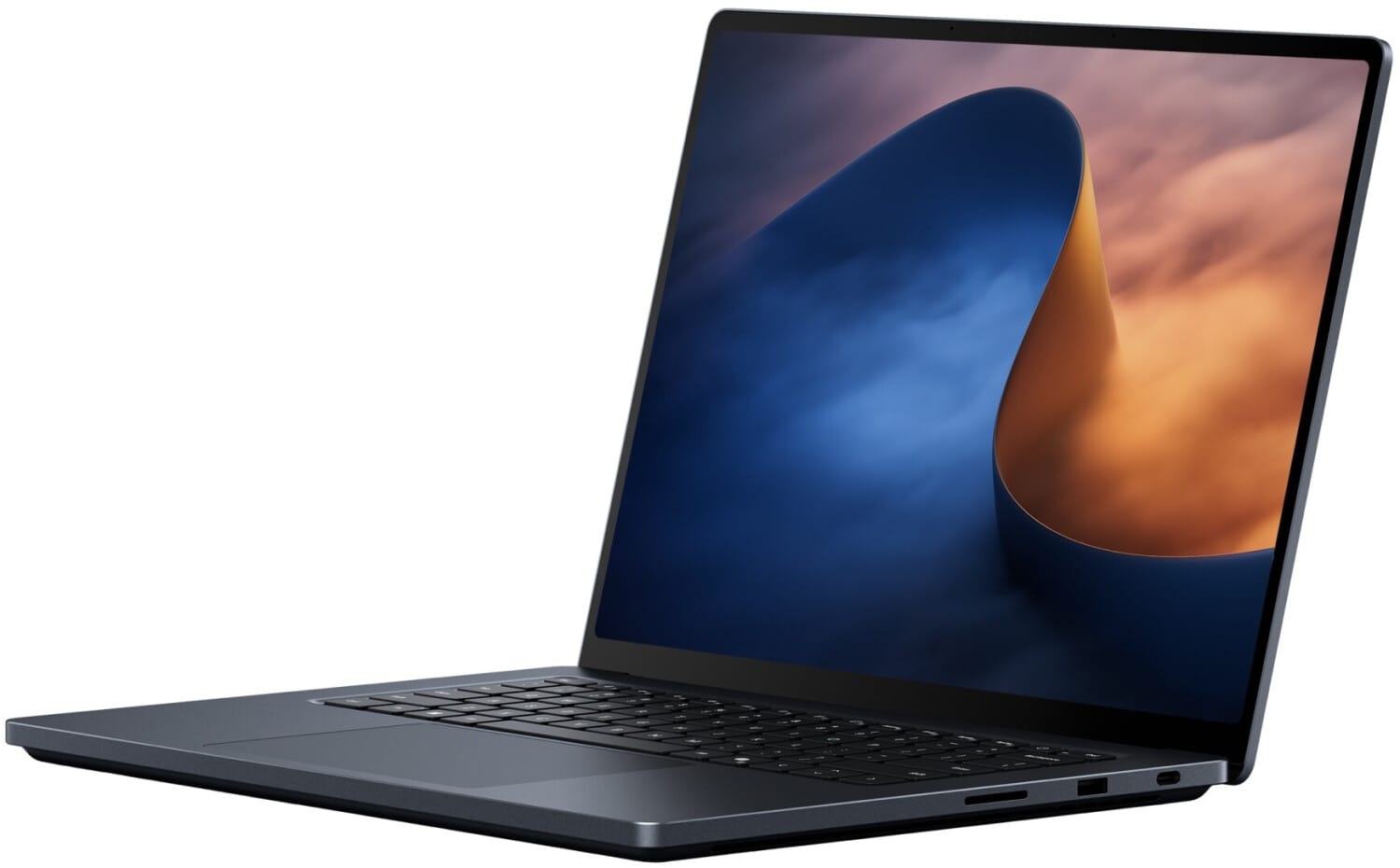
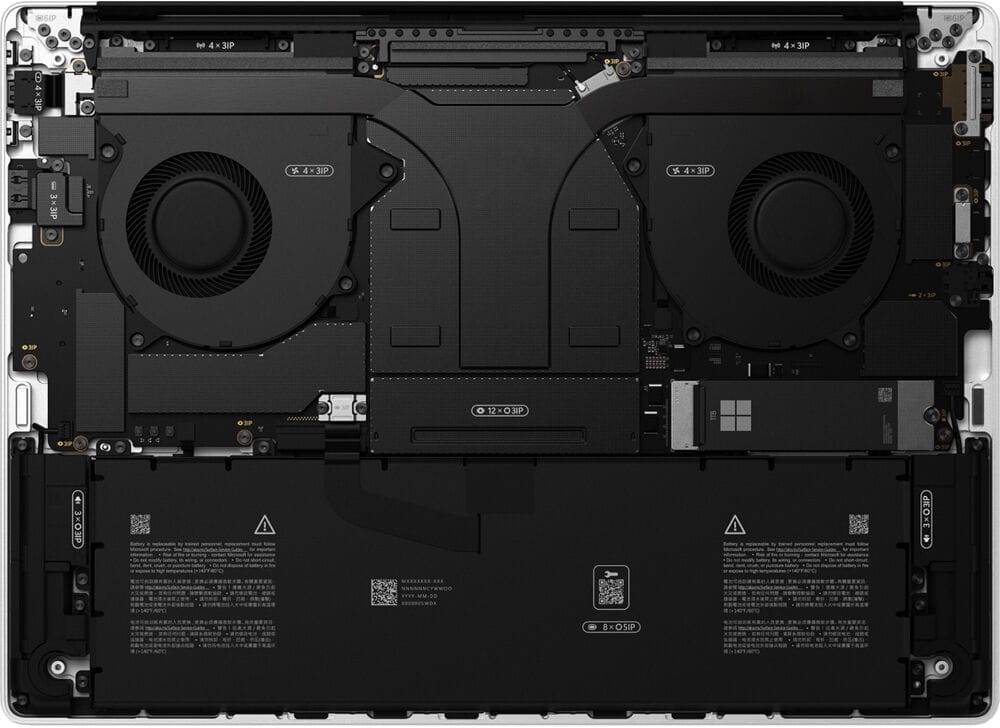
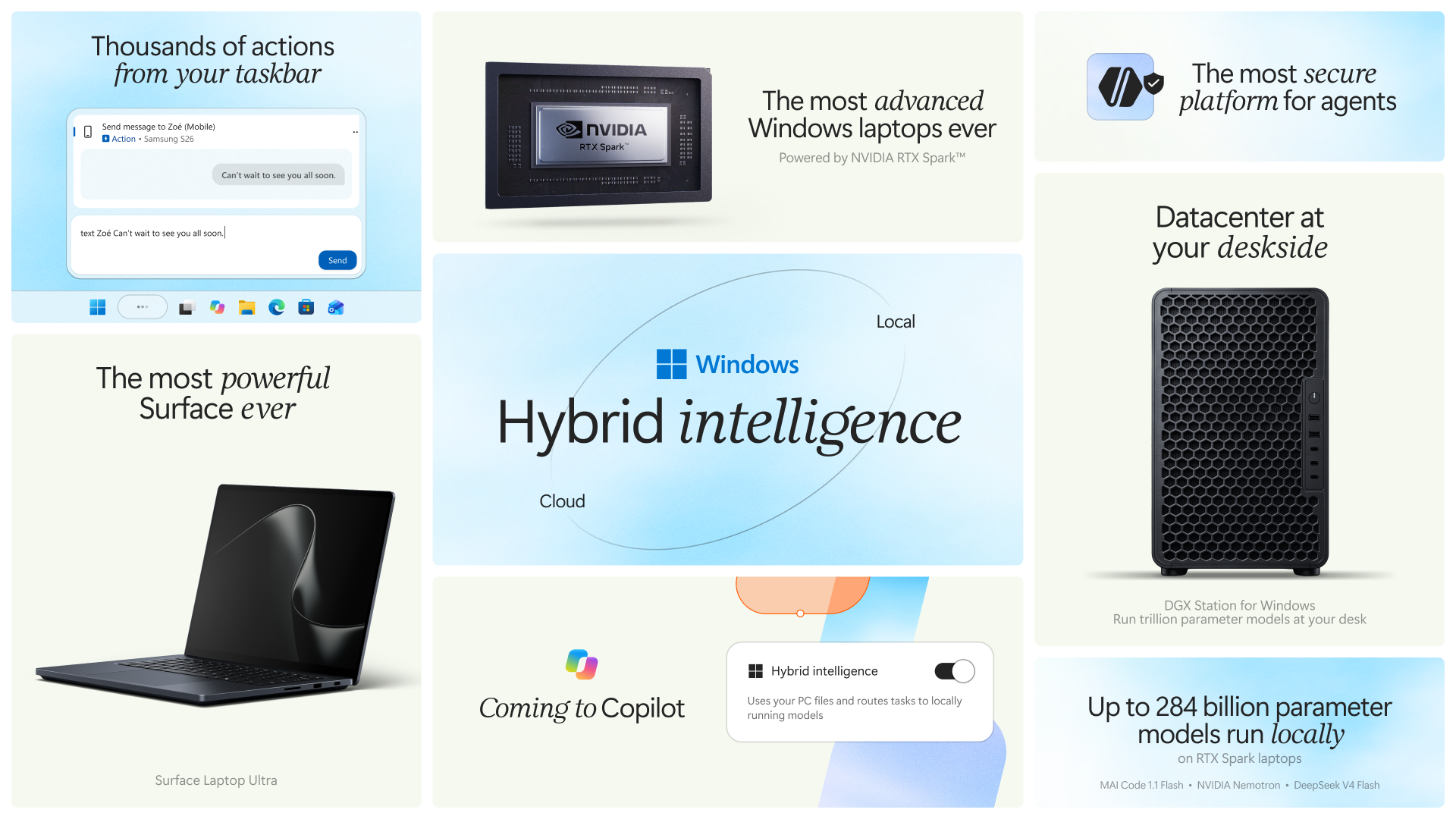
Microsoft spent the most time on their new Surface Laptop Ultra. Only 18mm thick, it boasts a new cooling system Microsoft says handles up to 2.5x more heat than previous designs, and a new 15-inch PixelSense Ultra touchscreen that Microsoft claims is the brightest of any laptop for HDR content.
The storage is user-removable, continuing the trend from previous Surface laptops in recent years, though everything else is soldered to the motherboard.
It also charges through a new magnetic USB-C cable (Microsoft calls it Magnetic Connect) that snaps off easily if someone trips over it or tugs on the cable, while still working like a full-featured USB-C port. Alongside that you get two more USB-C ports, HDMI 2.1, USB 10Gbps Type-A, SD card reader and a headphone jack.
Acer and Gigabyte were also named as partners for the RTX Spark platform, so expect more models over time, as well as variants at cheaper prices. Microsoft Surface Laptop Ultra starts at $2599.
Beyond laptops
Laptops are only part of the new range. Compact RTX Spark desktops are also coming later this year, designed to sit in a corner and run AI agents around the clock. Microsoft also has a Surface RTX Spark Dev Box for developers, shipping in the US in November and pre-configured with developer use and headless agents in mind.
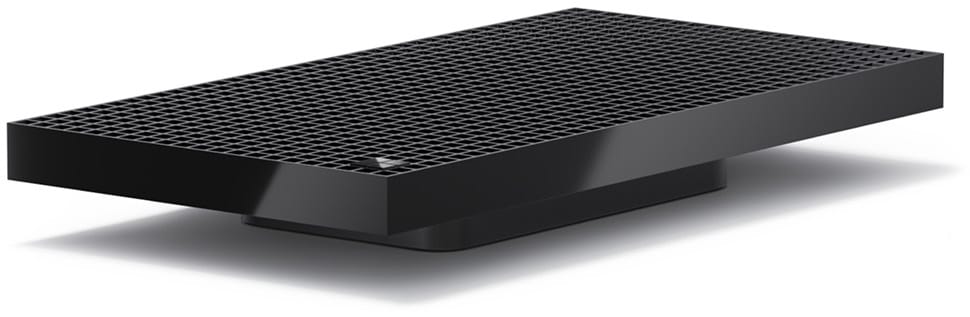
At the very top, NVIDIA's DGX Station is also coming with Windows 11 later this year. It is a fully capable workstation platform, aimed at research teams and businesses that want to run trillion-parameter models on their own hardware and local data. Dell and HP have already announced models. It's not something you'll be running Crysis on, but it shows how seriously Microsoft and NVIDIA are taking this initiative.
What's changing in Windows
The hardware is the headline, but the bigger story is what Microsoft is doing to Windows. The TL;DR is that Windows is being rebuilt so that AI agents can run safely, and locally, on your PC. Several surfaces across Windows are being changed to accommodate them.
A safer home for AI agents
An AI agent can open files, use apps, write code and keep working in the background for hours with minimal supervision. That's quite useful, and it's also a little alarming if you don't know to what extent it can read and work on your data.
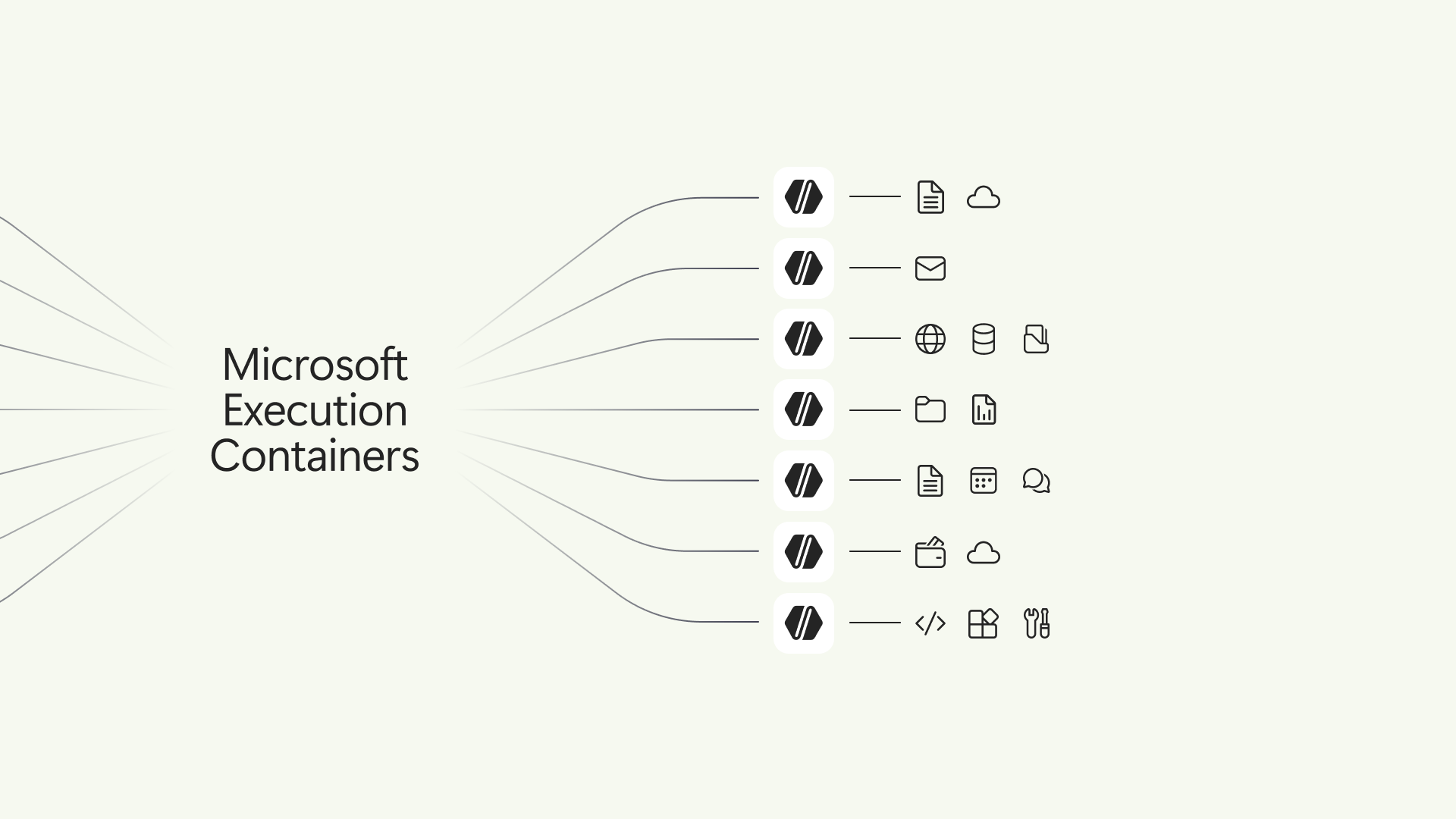
Microsoft's answer is Microsoft Execution Containers (MXC), which became generally available on Windows 11 at the event. Each agent runs in its own sandbox, with rules about which files and networks it can access, enforced on the fly while it runs. Windows will also be able to tell whether something was done by you or by an agent, and businesses can manage agents with the same tools they use for the rest of their fleet in the M365 and Intune management consoles.
Even though this all looks fancy and shiny, it is still essentially good old SharePoint working in the background. In addition, other technologies like Entra ID, Azure, and the new Agent 365 management service are all being roped in to make MXC more effective in locating and collating data for businesses that are going to use it.
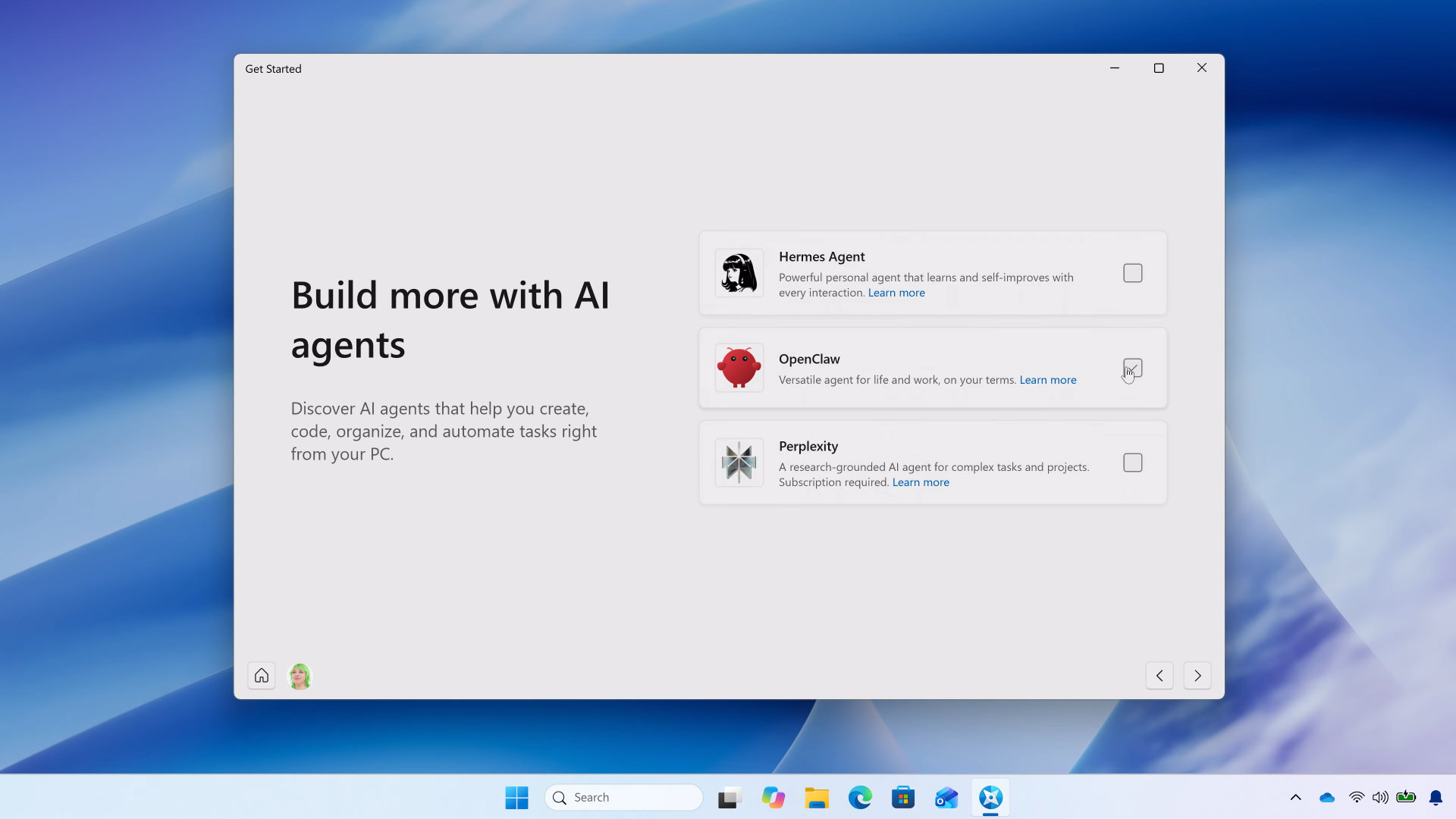
It's not just a Microsoft shop though. Several popular agent harnesses already support MXC including OpenAI's Codex, GitHub Copilot and LM Studio. Claude Code, Perplexity, Hermes Agent, and Meta Muse are also adding support for MXC.
In fact, Microsoft is also working on a new setup experience for agent use. On new mini desktop PCs, users will soon be able to launch an integrated setup process for Perplexity, Openclaw, and Hermes Agent that will be automatically set up and configured for local model use. There's even a local Openclaw gateway in the works.
Hybrid Intelligence: your PC and the cloud, working together
Hybrid Intelligence is Microsoft's term for splitting AI work between your PC and the cloud. Smaller or more private tasks run locally when you need more speed and privacy; bigger and more complex tasks go to cloud models when they need to. This leverages something called Project HydraFusion, a model router originally designed for use inside GitHub Copilot.
HydraFusion sends each task to the most suitable AI model that it evaluates on the fly, and will be able to use local models on Copilot+ PCs in an upcoming preview version of the GitHub Copilot app shipping later this year. You can read more about HydraFusion and how it works on GitHub's blog post announcing the model router.
To make all this happen seamlessly, Microsoft has also worked on shrinking generative models as much as possible to run locally. Microsoft developers shrunk their internal MAI Code 1.1 Flash coding model by nearly 80% so it runs on a RTX Spark Laptop with 48GB of RAM, and further optimised models from NVIDIA and DeepSeek are coming to RTX Spark as well.
A much more capable Copilot
To surface these new capabilities to users, Microsoft is revamping the Copilot app and overall user experience. The new Copilot app, introduced in September with Home, Code and Autopilot sections, is getting three new abilities on Copilot+ PCs:
- Local context: with your permission, Copilot can use your files and recent activity on the PC.
- Local actions: it can do things for you, like organising files, checking your PC's health or fixing problems.
- Local models: it can use AI models running on your PC instead of always going to the cloud, and intelligently route between the two.
Autopilot, Copilot's new background agent, will use all three to keep working on tasks while you do something else. Microsoft stressed in their Windows & Surface event that you stay in control of what the agent does and where it can work, and that these features need your permission to do anything on your behalf. Hybrid Intelligence in Copilot is opt-in.
These new features and the new Copilot app are expected to start rolling out to Copilot+ PCs in the coming months. There is currently still no word on whether custom or pre-built PCs will one day qualify for these same capabilities, but we're hoping that Microsoft will have something to say about this next year.
Search is changing, again
The final piece of the agentic puzzle is a new Search experience. On stage, Microsoft showed off a never-before-seen Windows Search on the taskbar that learns to carry out actions, not just find things.
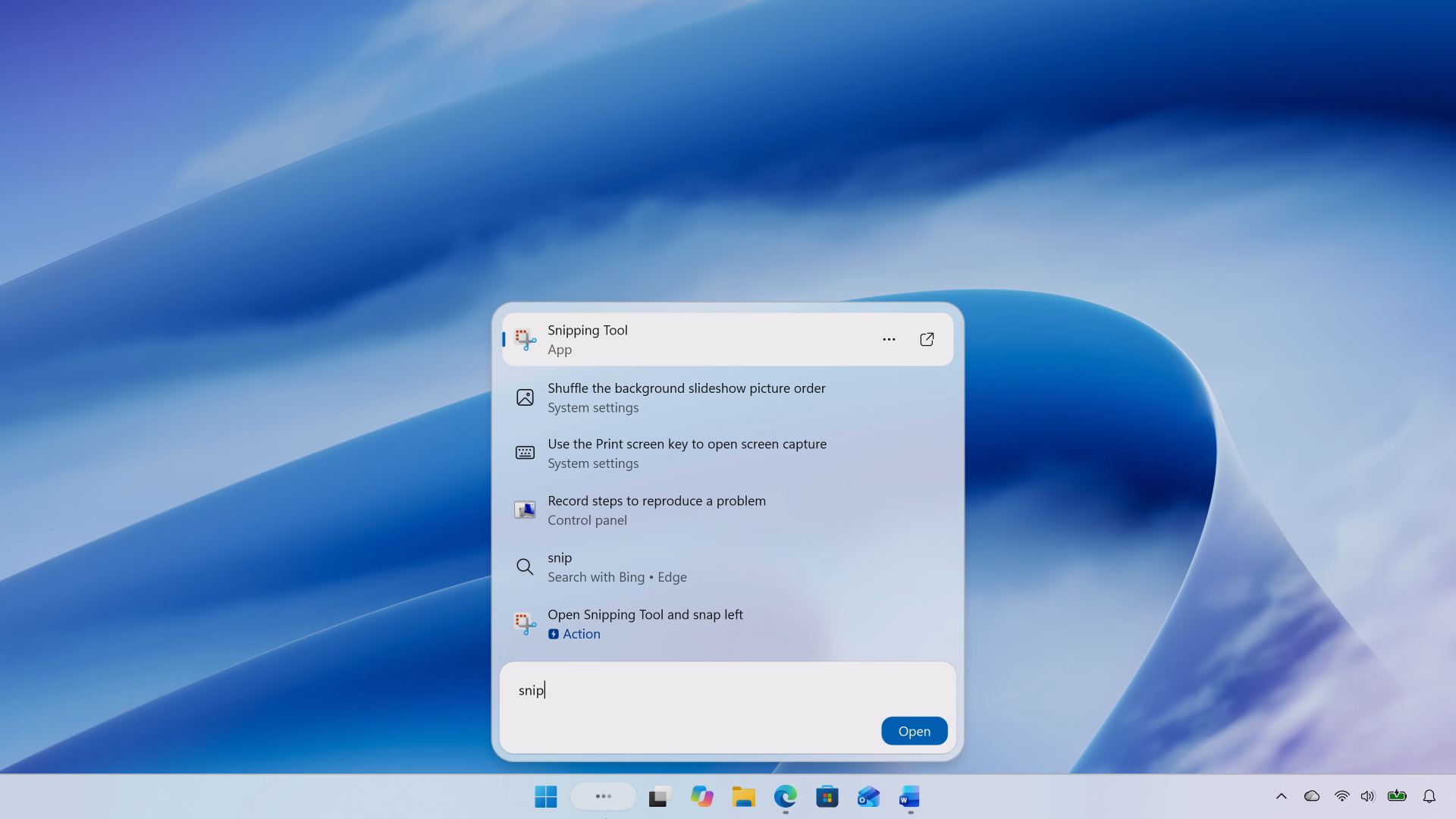
The presentation included typical soft-ball examples of what it could do, like typing "dark mode" to switch your theme, or "mute", "turn on Do Not Disturb" or "arrange my windows" to bring up those features in natural language.
But Search is instead taking PowerToys Run and extending it to all points that Windows' integrations can touch. Via the new Start experience Copilot will do things on your behalf including message people via Phone Link, begin research for you, start running background tasks, and help kickstart a workflow.
It's rolling out to Windows Insiders now, with the optional Copilot link inside Search coming to selected countries and languages later this year.
Tying it all up
If you build things with software, create content, work with data or write code, RTX Spark laptops are worth placing on your radar for a future purchase. The whole ecosystem that Microsoft Windows offers is being altered to support using local AI to rapidly develop automations and enhance workflows.
If you mainly want the new Copilot features, you don't need one. Those are coming to Copilot+ PCs, which already cost far less. Microsoft says over 40% of business laptops now being built are Copilot+ PCs, and they expect the brand to become further entrenched in the workplace thanks to these upcoming capabilities.
If you mainly play games, these systems aren't really for you. RTX Spark is an Arm-based platform, and although there is a ton of work being put into making games compatible, it's still a growing market. Popular titles like Fortnite, Alan Wake 2 and World of Warcraft already run, with League of Legends, Valorant, PUBG and Genshin Impact on the way. Microsoft announced support for Call of Duty, arriving in 2027, and showed off Gears of War: E-Day already running on an RTX Spark Dev Box.
NVIDIA is working with industry partners and developers to improve support, but older or niche games may not run yet. A traditional gaming laptop is still the safer buy (check out our WootBooks!).
When can you buy one in South Africa? Local pricing and availability haven't been announced yet. Follow us on social media and get subscribed to our newsletter to stay informed.